Masalah 課題 The Problem
Di toko yang jual barang rumah tangga, pertanyaan pelanggan lewat WhatsApp datang terus sepanjang hari — "harga ember yang gede berapa", "masih ada stok baskom warna merah?", "ada jerigen yang ada keran nya nggak?" Karyawan yang jaga toko sering harus jeda dulu dari pelanggan yang ada di depan mereka untuk balas chat, atau balasnya baru bisa beberapa jam kemudian kalau lagi sibuk — dan di luar jam kerja, pertanyaan itu menumpuk sampai besok. 住まい用品を扱う店舗では、WhatsApp経由の顧客からの質問が一日中絶えません — 「大きいバケツはいくらですか」「赤いたらいの在庫はまだありますか」「蛇口付きのポリタンクはありますか」。店番をしているスタッフは、目の前の来店客への対応を中断して返信するか、忙しい時間帯には数時間後にしか返信できず、営業時間外の質問は翌日まで積み上がってしまいます。 At a shop selling household goods, WhatsApp questions from customers come in all day — "how much is the big bucket," "is the red basin still in stock," "do you have a jerry can with a tap." Staff on the floor either have to pause the customer in front of them to reply, or the reply only comes hours later when things are busy — and outside business hours, questions just pile up until the next day.
Masalahnya bukan cuma soal kecepatan balas. Pelanggan jarang menyebut nama produk persis seperti yang tertulis di catatan toko — mereka menjelaskan dengan kata-kata sendiri: "yang gede", "yang ada keran nya", "yang biasa dipakai buat cuci baju". Kalau sistemnya cuma mencocokkan kata kunci persis, pertanyaan seperti ini gampang tidak ketemu jawabannya, padahal barangnya ada. 問題は返信の速さだけではありません。顧客は店舗の記録に書かれている正式な商品名で質問することはほとんどなく、自分の言葉で説明します — 「大きい方の」「蛇口が付いてる方」「普段洗濯に使うやつ」。システムが完全一致のキーワード検索しかできない場合、こうした質問は在庫があるにもかかわらず該当する答えを見つけられないことがよくあります。 The problem isn't only response speed. Customers rarely use the exact product name written in the shop's own records — they describe things in their own words: "the big one," "the one with a tap," "the one people usually use for laundry." If the system only matches exact keywords, questions like these often come up empty even when the item is right there in stock.
Solusi ソリューション The Solution
Sekarang, toko bisa punya asisten AI yang jalan langsung di WhatsApp dan membaca langsung dari data produk toko — harga dan stok selalu sesuai catatan terbaru, bukan angka yang diketik manual dan bisa ketinggalan zaman. Yang membuat ini beda dari chatbot pencarian kata kunci biasa: setiap produk punya "arti" yang dipahami sistem lewat teknologi pencarian semantik, jadi asisten ini mencocokkan maksud pertanyaan pelanggan, bukan cuma kata yang persis sama. 現在では、店舗はWhatsApp上で直接動作するAIアシスタントを持つことができ、店舗の商品データを直接参照します — 価格と在庫は常に最新の記録と一致しており、手入力されて古くなった数字ではありません。一般的なキーワード検索型チャットボットと異なる点は、各商品にセマンティック検索技術によって理解される「意味」が付与されていることです。そのため、このアシスタントは完全に一致する単語ではなく、顧客の質問の意図に基づいてマッチングを行います。 Now, a shop can have an AI assistant that runs directly on WhatsApp and reads straight from the shop's own product data — price and stock always match the latest records, not a manually typed number that can go stale. What sets this apart from an ordinary keyword-search chatbot: every product carries a "meaning" the system understands through semantic search technology, so the assistant matches what the customer means, not just words that happen to match exactly.
Pelanggan tetap bisa bertanya dengan bahasa sehari-hari seperti biasa mereka chat — tidak perlu tahu nama resmi produk atau kode barang. Asisten mencari barang yang paling sesuai dengan yang dimaksud, lalu menjawab dengan harga dan status stok yang akurat, kapan saja pertanyaan itu masuk — termasuk di luar jam toko. 顧客は普段のチャットと同じように、日常的な言葉で質問できます — 正式な商品名や商品コードを知っている必要はありません。アシスタントは意図に最も合致する商品を検索し、正確な価格と在庫状況を返信します。営業時間外に届いた質問であっても同様です。 Customers can still ask the way they'd normally chat — no need to know the official product name or item code. The assistant finds the closest match to what's being asked, then replies with an accurate price and stock status, whenever the question comes in — including outside shop hours.
Contoh Percakapan Asli 実際の会話例 Real Conversation Examples
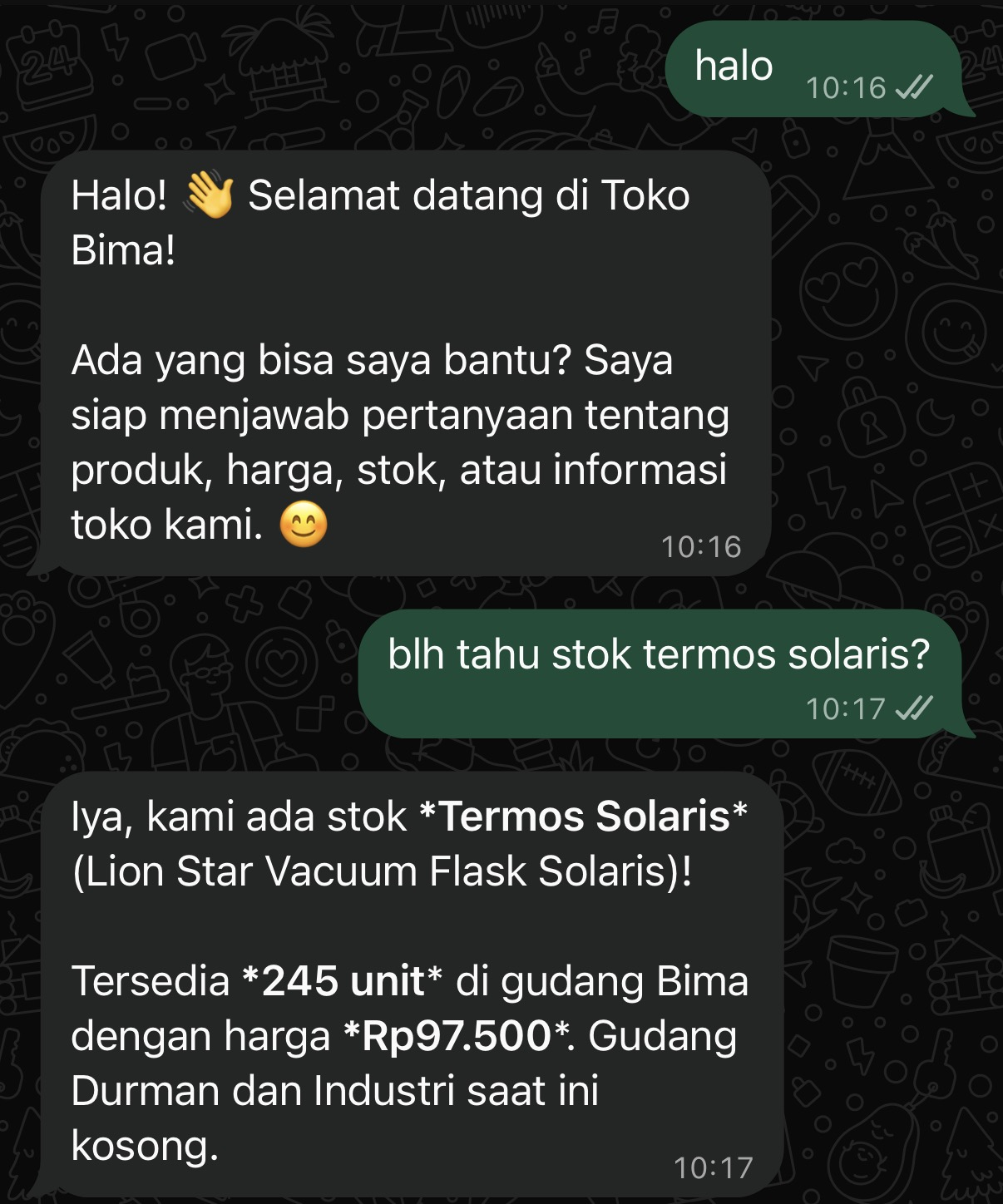
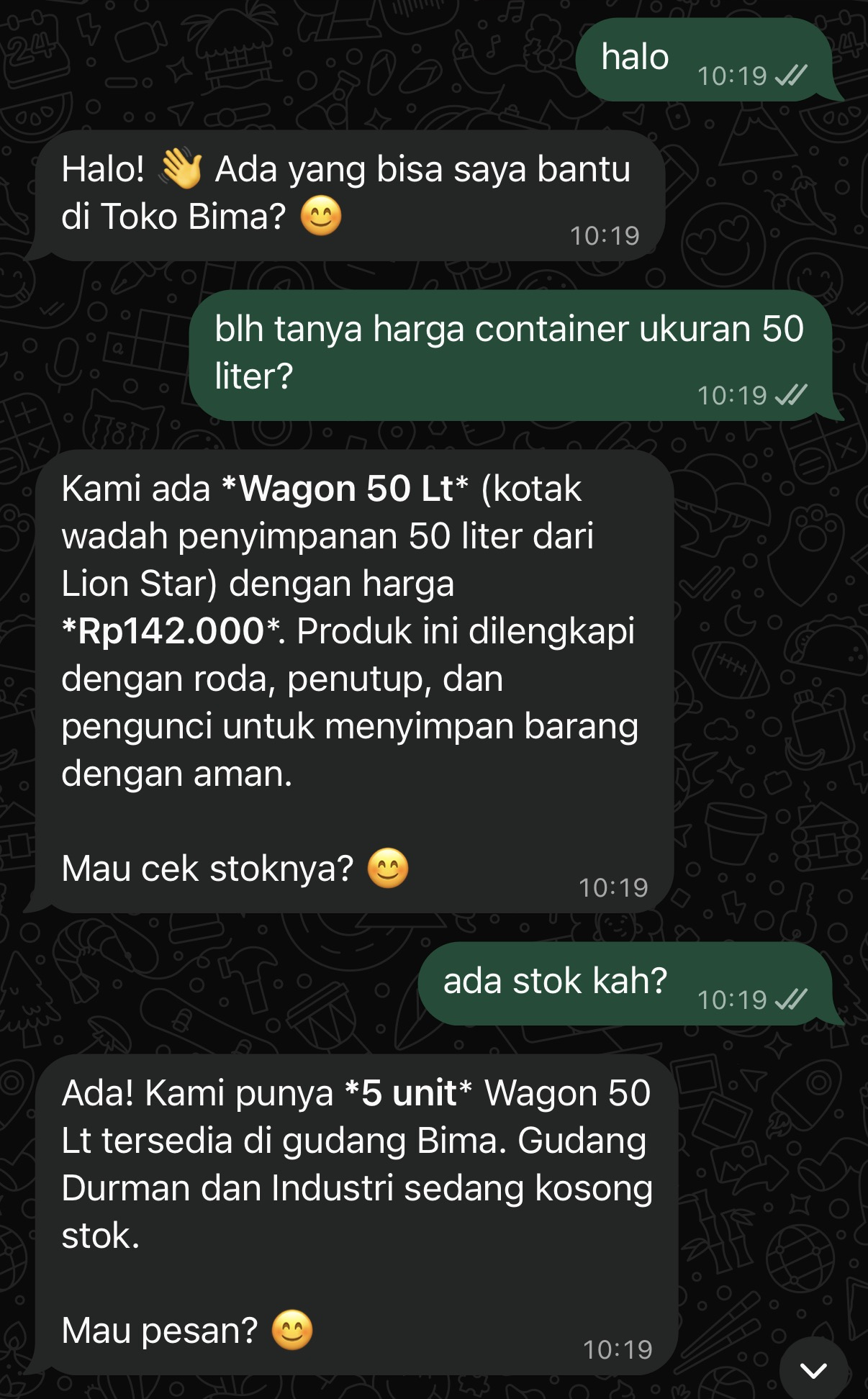
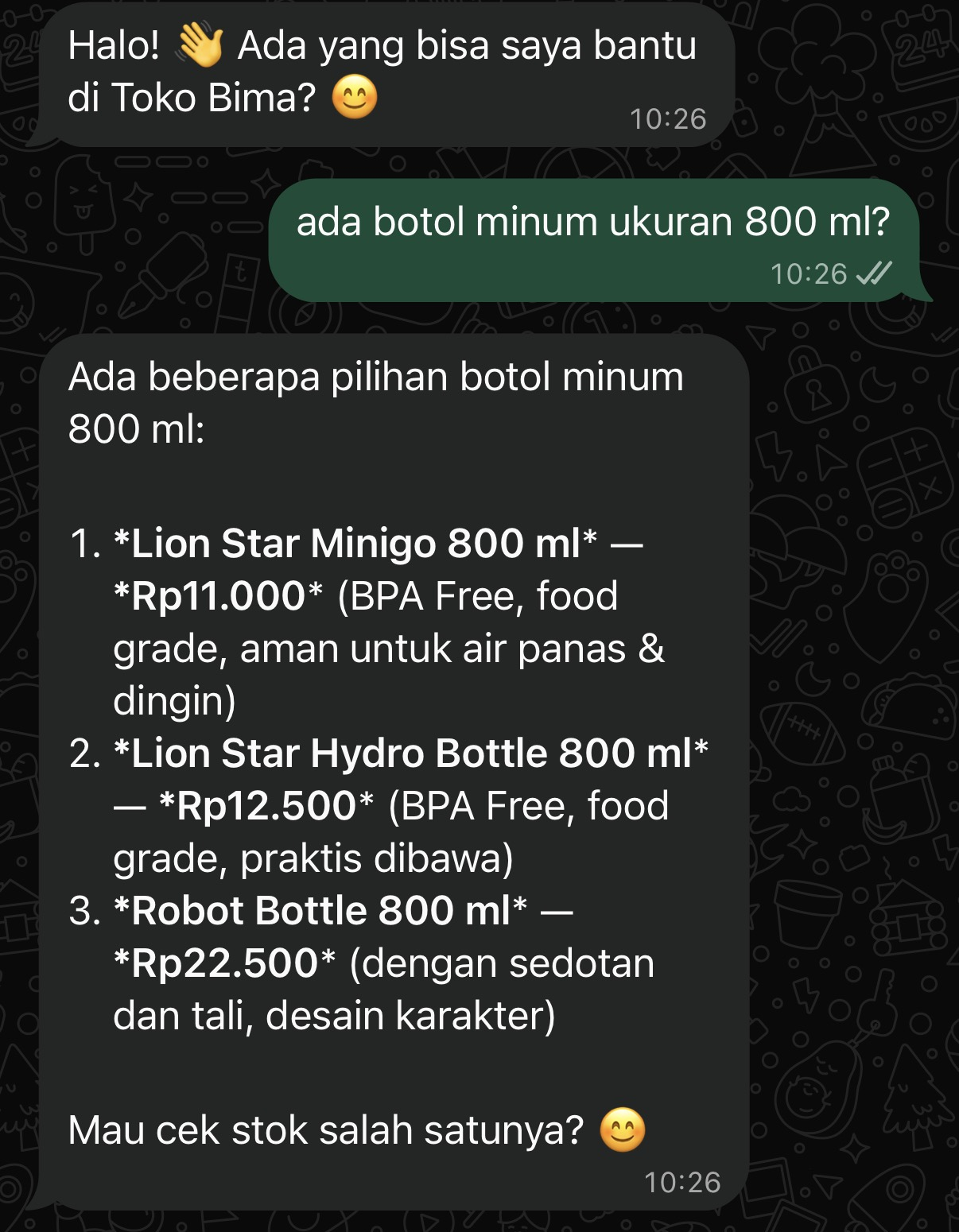
Tiga contoh nyata dari asisten yang sudah jalan di WhatsApp Toko Bima — belum diedit, hanya tangkapan layar percakapan asli. 実際にToko BimaのWhatsAppで稼働しているアシスタントとの本物のやり取りを3例紹介します — 編集なしの実際の会話のスクリーンショットです。 Three real examples from the assistant already running on Toko Bima's WhatsApp — unedited screenshots of actual conversations.
Cara Kerja 仕組み How It Works
Setiap produk di data toko diberi "makna" lewat teknologi embedding — bukan cuma nama dan harga, tapi juga apa fungsinya dan bagaimana biasanya orang menyebutnya
        ↓
Saat pertanyaan masuk dari WhatsApp, asisten membandingkan maksud pertanyaan itu dengan makna setiap produk yang sudah tersimpan — bukan mencari kata yang sama persis
        ↓
Produk yang paling sesuai ditemukan, lalu asisten mengambil harga dan status stok terbaru langsung dari data toko yang sama dipakai kasir
        ↓
Jawaban dikirim balik ke pelanggan dalam bahasa yang wajar, dalam hitungan detik — tidak peduli jam berapa pertanyaan itu masuk
        ↓
Kalau ada produk baru ditambahkan, namanya diganti, atau ditarik dari penjualan, "makna" produk itu diperbarui otomatis supaya jawaban asisten tetap sesuai data terkini店舗データ内の各商品には、エンベディング技術によって「意味」が付与されます — 名称と価格だけでなく、その機能や一般的にどう呼ばれているかも含まれます
        ↓
WhatsAppから質問が届くと、アシスタントはその質問の意図を、保存されている各商品の「意味」と比較します — 完全に一致する単語を探すのではありません
        ↓
最も合致する商品が見つかると、アシスタントはレジと同じ店舗データから最新の価格と在庫状況を直接取得します
        ↓
回答は自然な言葉で数秒以内に顧客へ送信されます — 質問がいつ届いたかに関係なく
        ↓
新しい商品が追加されたり、名称が変更されたり、販売が終了したりした場合、商品の「意味」は自動的に更新され、アシスタントの回答が常に最新のデータと一致するようになりますEvery product in the shop's data is given "meaning" through embedding technology — not just its name and price, but what it's for and how people usually refer to it
        ↓
When a question comes in on WhatsApp, the assistant compares what that question means against every product's stored meaning — not searching for an exact matching word
        ↓
The closest-matching product is found, and the assistant pulls the current price and stock status straight from the same data the cashier uses
        ↓
The reply goes back to the customer in natural language within seconds — no matter what time the question came in
        ↓
When a product is added, renamed, or pulled from sale, its meaning updates automatically so the assistant's answers keep matching the latest data
Kenapa Ini Solusi yang Tepat なぜこの設計が正しいのか Why This Design Solves It
Toko barang rumah tangga menjual ratusan bahkan ribuan jenis barang, dan pelanggan tidak pernah diharuskan hafal nama resmi tiap barang sebelum bertanya — itu bukan cara orang biasa bicara. Chatbot yang cuma bisa mencocokkan kata kunci persis akan sering "tidak menemukan" barang yang sebenarnya ada, dan pelanggan yang kecewa biasanya tidak bertanya ulang dengan kalimat lain — mereka cuma pindah ke toko lain. Solusi yang tepat bukan melatih pelanggan bicara "sesuai format", tapi membangun sistem yang mengerti maksud, sama seperti karyawan toko yang berpengalaman bisa langsung tahu barang mana yang dimaksud pelanggan meski disebut dengan cara berbeda-beda. 住まい用品店では数百から数千種類の商品を扱っており、顧客が質問する前に正式な商品名を暗記していることは決してありません — それは人が普段話す方法ではないからです。完全一致のキーワードでしか検索できないチャットボットは、実際には在庫がある商品でも頻繁に「見つかりません」と返してしまい、がっかりした顧客は言い方を変えて聞き直すことはほとんどなく、単に別の店に行ってしまいます。正しい解決策は、顧客に「決まった言い方」を教育することではなく、経験豊富な店員が言い方が違っても顧客の意図をすぐに理解できるのと同じように、意図を理解するシステムを構築することです。 A household-goods shop sells hundreds, even thousands, of different items, and customers are never expected to memorize the official name of each one before asking about it — that's not how people actually talk. A chatbot that can only match exact keywords will often come back "not found" for something that's genuinely in stock, and a disappointed customer usually doesn't rephrase and try again — they just go to a different shop. The right fix isn't training customers to speak in a fixed format; it's building a system that understands intent, the same way an experienced shop employee can immediately tell which item a customer means even when it's described a different way each time.
Detail Teknis 技術詳細 Technical Details
- Pencarian semantik (embedding): setiap produk dipetakan ke "makna"-nya lewat teknologi pgvector, disimpan di database Supabase yang sama dengan data tokoセマンティック検索(エンベディング):各商品はpgvector技術によってその「意味」にマッピングされ、店舗データと同じSupabaseデータベースに保存されますSemantic search (embedding): every product is mapped to its "meaning" using pgvector technology, stored in the same Supabase database as the shop's product data
- Sumber data: harga dan stok dibaca langsung dari database yang sama dipakai aplikasi kasir toko — bukan salinan terpisah yang bisa ketinggalan updateデータソース:価格と在庫は、店舗のレジアプリが使用しているのと同じデータベースから直接読み取られます — 更新が遅れる可能性のある別のコピーではありませんData source: price and stock are read directly from the same database the shop's own POS app uses — not a separate copy that can fall behind
- Saluran: WhatsApp, kanal yang sudah dipakai sehari-hari oleh pelanggan dan toko — tidak perlu instal aplikasi baru連携チャネル:WhatsApp — 顧客と店舗が日常的に既に使用しているチャネルであり、新しいアプリのインストールは不要ですChannel: WhatsApp, a channel customers and the shop already use every day — no new app to install
- Cakupan saat ini: menjawab pertanyaan harga dan stok; belum menangani pemesanan/transaksi lewat chat現在の対応範囲:価格と在庫に関する質問への回答。チャット経由での注文・取引にはまだ対応していませんCurrent scope: answers price and stock questions; does not yet handle ordering or transactions through chat
- Update otomatis: begitu produk baru ditambahkan, diganti nama, atau ditarik dari penjualan, makna semantiknya diperbarui supaya jawaban tetap akurat自動更新:新商品の追加、名称変更、販売終了があった場合、セマンティックな意味づけも自動的に更新され、回答の正確性が保たれますAutomatic updates: when a product is added, renamed, or pulled from sale, its semantic meaning updates automatically so answers stay accurate
Kenapa Ini Penting なぜこれが重要なのか Why This Matters
Untuk toko kecil dengan karyawan terbatas, waktu yang dihabiskan menjawab pertanyaan berulang lewat WhatsApp adalah waktu yang tidak dipakai melayani pelanggan yang sedang ada di toko. Asisten yang bisa menjawab pertanyaan harga dan stok secara akurat, kapan saja, membebaskan karyawan dari beban itu — dan pelanggan mendapat jawaban lebih cepat, bahkan di luar jam toko, tanpa harus menunggu atau menebak-nebak nama barang yang benar. 人員が限られる小規模店舗にとって、WhatsAppで繰り返される質問に対応する時間は、店内にいる顧客への対応に使えたはずの時間です。価格と在庫の質問にいつでも正確に答えられるアシスタントは、スタッフをその負担から解放します — そして顧客は、営業時間外であっても、正しい商品名を推測して待つことなく、より早く回答を得られます。 For a small shop with limited staff, time spent answering repeat questions on WhatsApp is time not spent serving the customer standing right in front of them. An assistant that can answer price and stock questions accurately, any time, frees staff from that load — and customers get a faster answer, even outside shop hours, without waiting or having to guess the exact right product name.
Yang Kami Pelajari 今回の学び What We Learned
Bagian tersulit bukan menyambungkan WhatsApp ke database — itu relatif sederhana. Bagian yang butuh iterasi paling banyak adalah membuat asisten benar-benar mengerti cara pelanggan bicara sehari-hari, termasuk bahasa informal dan penyebutan barang yang tidak baku. Pencarian semantik menyelesaikan sebagian besar masalah ini, tapi kualitas jawabannya tetap bergantung pada seberapa lengkap dan jelas data produk yang mendasarinya — semakin rapi data toko, semakin akurat asisten ini bekerja. 最も難しかったのはWhatsAppとデータベースを接続することではなく — それは比較的単純です。最も多くの試行錯誤を要したのは、顧客が普段話す言葉、つまり口語表現や商品の非標準的な呼び方を、アシスタントが実際に理解できるようにすることでした。セマンティック検索はこの問題の多くを解決しますが、回答の質は結局のところ、その基盤となる商品データがどれだけ整理され、明確であるかに左右されます — 店舗のデータが整うほど、このアシスタントはより正確に機能します。 The hardest part wasn't connecting WhatsApp to the database — that's relatively simple. The part that took the most iteration was getting the assistant to genuinely understand how customers actually talk day to day, including informal phrasing and non-standard ways of naming items. Semantic search solves most of this, but answer quality still depends on how complete and clear the underlying product data is — the cleaner the shop's data, the more accurately this assistant performs.
Dibuat oleh developer lokal di Bandung yang membangun sistem sederhana untuk kebutuhan toko dan usaha kecil sehari-hari — mulai dari aplikasi kasir yang tetap jalan tanpa internet, chatbot WhatsApp, sampai otomasi kerja lainnya. Kalau usaha Anda butuh hal serupa, hubungi Inti Sakura Solutions. バンドン(インドネシア)を拠点とする独立系AI開発者が、中小企業向けにオフラインファーストのPOSアプリ、WhatsAppチャットボット、ワークフロー自動化などのカスタムシステムを構築しています。同様のニーズをお持ちの企業様は、Inti Sakura Solutionsまでご連絡ください。 Built by an independent AI developer based in Bandung, Indonesia, who builds custom systems for SMEs — including offline-first POS apps, WhatsApp chatbots, and workflow automation. If your business has a similar need, get in touch with Inti Sakura Solutions.